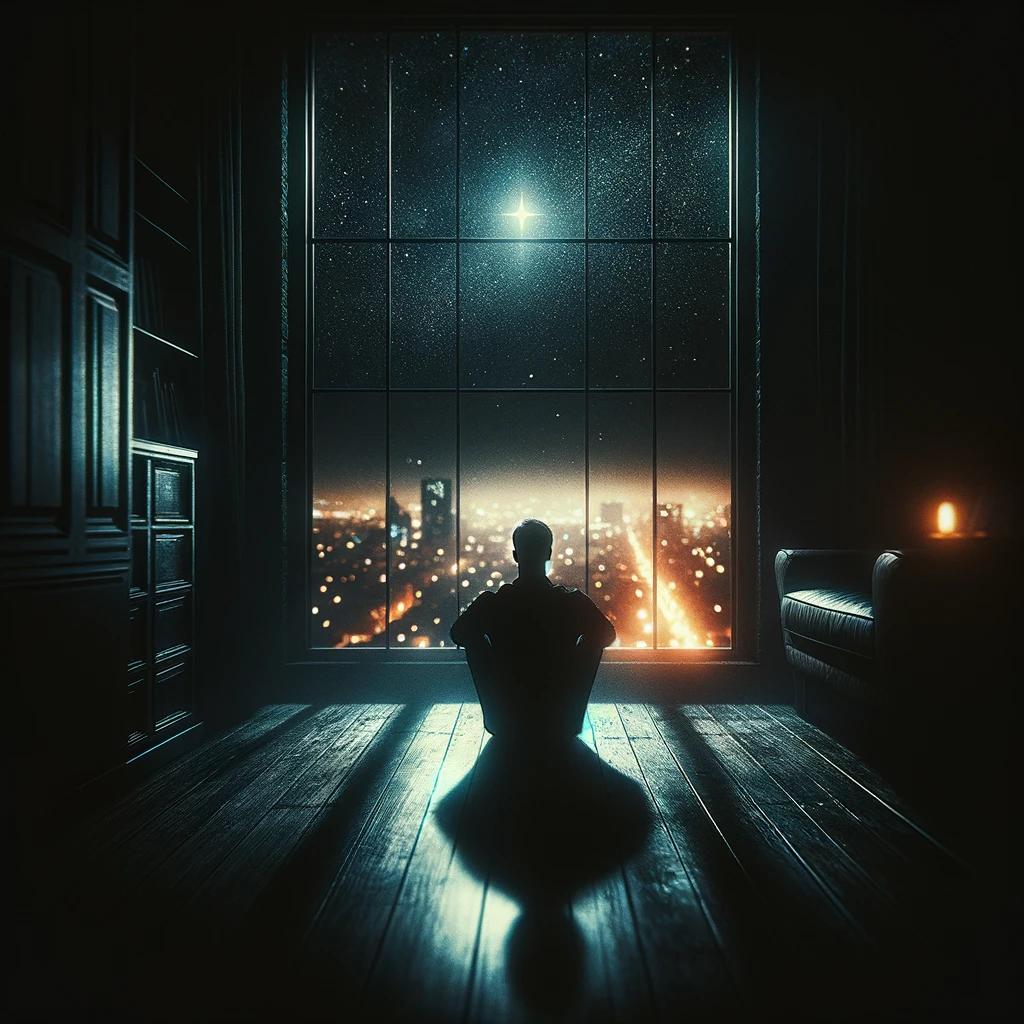
There’s something about the night that makes you feel as if you’re the last soul in the universe — especially when your mind decides to play reruns of your most haunting memories. That’s the uninvited guest of living with PTSD; it’s like having an erratic DJ in your head, spinning tracks of past horrors at the most inopportune times.
Post-Traumatic Stress Disorder—such a clinical label for something so profoundly messy. It sounds like something you could manage with the right binder, a few tabs perhaps: flashbacks, hypervigilance, insomnia… But it’s not neat. It’s chaos, it’s noise, it’s feeling everything at once and nothing at all. It’s a beast that lurks in the pauses of your heartbeat, waiting to leap out when you hear a car backfire or when the news plays something a little too close to a past you can’t forget.
I’ve found no heroism in waking from sleep, drenched in sweat, with a heart that feels like it’s going to punch through my chest. There’s no romance in the trigger that leaves you breathless in the middle of a crowded street, no poetic justice in the anxiety that clings like a second skin.
Irony comes in knowing that I once loved the night. I chose it. I worked the nights like a navy-blue batman with a stethoscope for a cape, and morphine attached to my tool belt. Though, I’ll confess — I never felt as cool as the caped crusader. I did, however, feel comfortable among squaller and shadow of a city darkened by nightfall. Take a little trip from then till now, and everything has changed. I no longer find comfort in the blackness of night. In the deepest parts of that ebony are where the bad things live. The tortured things. And when I find myself alone in the house with the prospect of a night in solitude, excitement at the façade of bachelorhood does not enthrall me — it terrifies me through muscle and bone, sinew and tendon, all the way through to that little kid hiding inside me that hates when the door is closed all the way.
Forty-one years of age, a man forged from military service, and a man who has endured the diseased sparkle of our city streets, finds himself frightful when faced with the task of sleeping one night alone in his own home. Play another song, DJ. This one sucks.
It’s not all bad, I suppose. I’ve gotten more comfortable with these solitary evenings. They are, after all, few and far between — mercy. It does provide me with the opportunity to switch tracks and maybe even carve out a new tune to replace the old ones. Each day spent recovering from this horrible little contort of the mind, studiously known as PTSD, is a day spent in movement toward a brighter tomorrow. I’ve survived longer, colder, more lonely nights than this — by comparison, I should view this evening as the proverbial “cakewalk”.
Like dawn breaking through the longest of nights, hope can carry a beleaguered soul through to tomorrow, and in tomorrow, the sun will shine with brilliance and defiance of the dark. As will I.
So goodnight to you, dear readers. May our heads rest comfortably on the pillows of wishful dreams and respite. I’ll talk to you again… in the morning. 😉





 Author Matthew Heneghan
Leave a comment